You Won’t Believe What We Found Driving Through Rotorua
Driving into Rotorua feels like stepping into another world—steam rising from the ground, the scent of sulfur in the air, and the deep pulse of Māori culture everywhere. We took the open road with no fixed plan, just a thirst for real experiences. What we discovered went beyond geysers and hot springs—it was the people, traditions, and unexpected moments that made it unforgettable. This is travel at its most authentic. The journey revealed not only the dramatic beauty of New Zealand’s geothermal heartland but also the living presence of Māori heritage, woven into every landscape and conversation. For travelers seeking connection over convenience, Rotorua offers a rare invitation: to slow down, listen closely, and witness a culture that honors both earth and ancestry with quiet strength.
The Open Road to Rotorua: Why Self-Driving Changes Everything
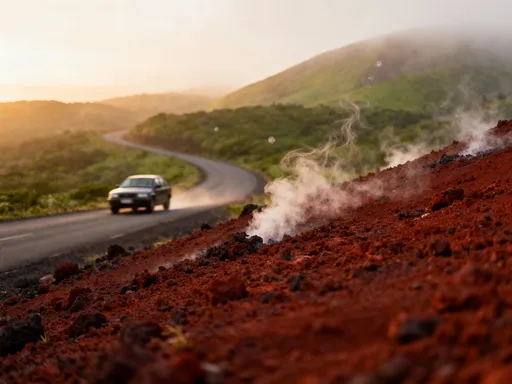
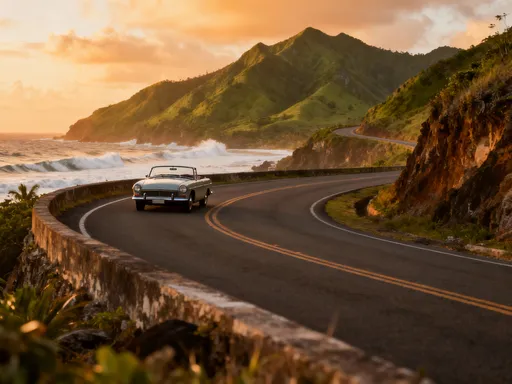
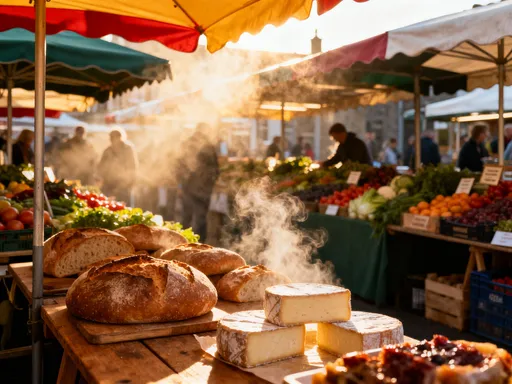
Traveling to Rotorua by car transforms the journey into an integral part of the experience. Whether departing from Auckland’s urban sprawl or the quieter streets of Hamilton, the drive south unfolds across rolling green hills, vast pastures dotted with sheep, and volcanic terrain that gradually intensifies as you near the Taupō Volcanic Zone. State Highway 1 offers a direct route, but the Thermal Explorer Highway—State Highway 5—provides a more scenic and culturally rich alternative. This lesser-traveled road winds through small towns like Murupara and Ngāhinapōuri, where roadside stalls sell fresh produce and hand-carved souvenirs, offering glimpses into rural life that few tourists see.
Self-driving allows for spontaneity, a quality often lost in guided tours or scheduled shuttles. You can pause at a steaming roadside fissure, pull over for a photo of a distant geyser plume, or stop to chat with a local farmer tending his land. These unplanned moments often become the most memorable. The flexibility of a private vehicle also opens access to remote cultural sites and natural attractions that public transport doesn’t reach. For families or small groups, this autonomy enhances both comfort and depth of exploration, making the trip feel personal rather than prepackaged.
Along the way, interpretive signs and visitor centers provide context about the region’s geological activity and Māori history. At Wai-O-Tapu Thermal Wonderland, just off SH5, visitors can witness the famous Champagne Pool and Lady Knox Geyser, but those who continue driving find quieter, less commercialized spots. The act of driving becomes a form of engagement—each mile revealing more of the land’s character and rhythm. It’s not just about reaching Rotorua; it’s about absorbing the journey, one volcanic ridge and cultural landmark at a time.
First Impressions: A Landscape Unlike Any Other
As you enter Rotorua, the first thing you notice is the air—warm, slightly pungent, carrying the unmistakable scent of sulfur. Steam rises from cracks in the pavement, from fenced-off reserves, and even from private backyards, a constant reminder that you are standing on one of the most geothermally active regions in the world. The ground itself feels alive, humming with energy beneath your feet. Bubbling mud pools churn in shades of gray and brown, their rhythmic pops and gurgles adding a primal soundtrack to the city. Fumaroles vent steam into the sky, and hot springs shimmer in hues of turquoise and emerald, colored by mineral deposits and heat-loving microorganisms.
This is not a landscape shaped solely by nature, but one deeply intertwined with human culture. For the Māori iwi (tribes) of the region, particularly the Tūhourangi and Ngāti Whakaue, the geothermal features are not just curiosities—they are taonga (treasures), integral to their identity, spirituality, and daily life. The earth’s heat has long been used for cooking, healing, and warmth. Place names throughout the region reflect this relationship: Whakarewarewa means “the place where things are heated,” a fitting description for an area where the boundary between land and culture is nearly seamless.
The sensory overload upon arrival is both disorienting and exhilarating. Children giggle at the sound of mud bubbles bursting, while adults pause to take in the vastness of the geothermal valleys. Yet beyond the novelty lies a deeper truth: this environment demands respect. The same forces that create beauty can also be destructive. Local guides often share stories of past eruptions and land shifts, reminding visitors that this is not a static park but a living, breathing system. To walk through Rotorua is to witness the power of Papatūānuku, the Earth Mother, in a way few places on Earth allow.
Te Puia: Where Culture Comes Alive
No visit to Rotorua is complete without a stop at Te Puia, a cultural and geothermal sanctuary located just outside the city center. Operated by the Tūhourangi Ngāti Wāhiao Trust, Te Puia is more than a tourist attraction—it is a living center of Māori tradition, education, and preservation. At its heart is the Pōhutu Geyser, which erupts up to twenty times a day, shooting steam and water over thirty meters into the air. Its name means “big splash,” and its regular bursts serve as a natural heartbeat for the site, drawing visitors to gather and marvel at its power.
But Te Puia’s true significance lies in its role as the home of the New Zealand Māori Arts and Crafts Institute, established in 1963 to revive and sustain traditional Māori art forms. Within the grounds, visitors can observe master carvers shaping intricate designs into native timber, their hands moving with precision honed over decades. Nearby, weavers work with harakeke (flax), transforming the fibrous plant into durable, beautifully patterned textiles. These demonstrations are not performances for show; they are part of an ongoing apprenticeship system, where knowledge is passed from elders to youth in a living lineage of skill and meaning.
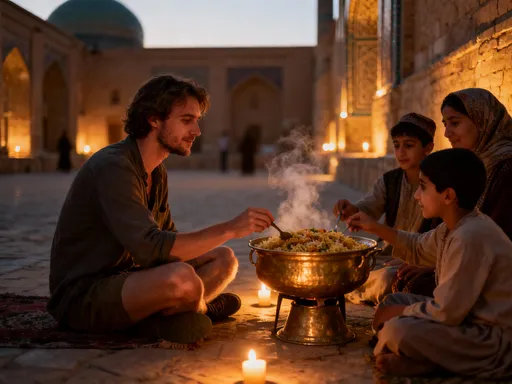
The cultural experience deepens with an evening visit that includes a pōwhiri (welcome ceremony), followed by a traditional hāngī feast. The hāngī, a method of cooking food in an earth oven using heated rocks, has been used for centuries. As the cloths are lifted from the underground pit, the aroma of slow-cooked meat, kūmara (sweet potato), and vegetables fills the air. Eating this meal is not just about taste—it is an act of participation in a communal tradition that values hospitality, gratitude, and connection. The evening often concludes with a kapa haka performance, where song, dance, and facial expressions tell stories of ancestry, love, and resilience. For many visitors, this moment—surrounded by firelight, song, and steam—becomes the emotional core of their Rotorua journey.
Hidden Gems Only Drivers Can Reach
While Rotorua’s major attractions draw crowds, some of its most meaningful experiences lie just beyond the main roads, accessible only to those willing to drive a little farther. One such place is the Ōkere Falls Scenic Reserve, located about twenty minutes northeast of the city. Here, the Kaituna River rushes through a series of rapids and waterfalls, including Tutea Falls—the highest commercially rafted waterfall in the world. But beyond the thrill of white-water adventures, the reserve holds cultural significance as a traditional fishing and gathering site for local iwi. Walking trails follow the riverbanks, offering quiet moments of reflection amid native bush and birdlife.
Further afield, ancient pā sites—fortified village locations—dot the volcanic hills surrounding Lake Rotorua. These earthworks, often marked by terraces and ditches, are silent witnesses to centuries of Māori settlement and defense strategies. While many are on private land or protected areas, some can be viewed from public roads or with guided permission. Driving through these landscapes, one gains a deeper appreciation for how geography shaped Māori society—elevated positions for safety, proximity to water sources, and access to geothermal resources for daily living.
Another hidden gem is the small marae communities scattered throughout the region. A marae is a sacred communal meeting ground, central to Māori social and spiritual life. While not all are open to casual visitors, some, like Whakarewarewa Marae, offer guided tours that include explanations of protocol, architecture, and the role of the marae in modern Māori life. Reaching these places by car allows travelers to move at their own pace, respecting the quiet dignity of these spaces without the pressure of a group itinerary. It also supports local economies, as many of these sites rely on visitor contributions to maintain their facilities and continue cultural programs.
Local Encounters: Conversations That Stay With You
What lingers long after the photos fade are the conversations—the quiet exchanges with people whose lives are rooted in this land. On a morning walk near Lake Tikitapu, we met a local guide named Rangi, who shared stories passed down from his grandfather about the origins of the lakes and the spirits said to dwell within them. He spoke not with theatrical flair, but with a calm certainty that made the myths feel real. When asked if he believed in the stories, he smiled and said, “They’re not just stories. They’re how we remember who we are.”
Elsewhere, at a roadside craft stall near Waimangu Valley, a weaver named Hine explained the symbolism behind the patterns in her flax baskets. Each twist and color held meaning—some represented family lines, others the journey of life or the flow of water. She emphasized that while anyone could learn the technique, the true essence came from understanding the stories behind the art. “It’s not just about making something pretty,” she said. “It’s about carrying forward a voice.”
These encounters are not staged; they happen naturally when travelers take the time to listen. Many Māori welcome respectful questions and genuine interest, especially from those who approach with humility rather than curiosity alone. Learning a few words of te reo Māori—such as kia ora (hello), mātua (uncle), or aroha (love)—can open doors and signal respect. The more one listens, the more one realizes that Māori culture is not a relic of the past but a living, evolving identity, shaped by both tradition and modernity. These conversations do not educate in the formal sense; they transform, leaving visitors with a quieter, deeper understanding of place and people.
Balancing Nature and Culture: The Rotorua Mindset
In Rotorua, the relationship between nature and culture is not symbolic—it is practical, daily, and deeply felt. The geothermal resources that attract tourists are also vital to local life. Hot springs provide heat for homes, greenhouses, and public pools. The same steam that powers geysers also generates electricity through geothermal plants, contributing to New Zealand’s renewable energy goals. Yet this utilization comes with responsibility. Overuse in the past led to the decline of some natural features, such as the once-famous Pink and White Terraces, destroyed in the 1886 Mount Tarawera eruption but also affected by earlier water diversion.
Today, there is a strong emphasis on sustainability and cultural guardianship, known as kaitiakitanga. This Māori concept refers to the role of humans as stewards of the environment, responsible for protecting it for future generations. At Te Puia and other sites, this principle guides everything from visitor numbers to waste management. Educational displays explain how geothermal systems work and why they must be protected. Tour operators are increasingly required to consult with local iwi before developing new attractions, ensuring that cultural values are respected alongside economic interests.
This balance is not always easy to maintain. Tourism brings income and visibility, but it can also lead to overcrowding and cultural commodification. The challenge lies in sharing Māori culture without reducing it to a performance. Many local leaders advocate for “cultural tourism with integrity,” where visitors are not just spectators but learners. This means following protocols, listening more than speaking, and understanding that some knowledge is not meant to be shared widely. The Rotorua mindset, then, is one of harmony—between progress and preservation, between visitor and host, between earth and people.
Why This Journey Stays With You
Leaving Rotorua, the steam fades from the roadside, the scent of sulfur gives way to clean air, and the rhythm of the city returns. Yet something remains—a quiet shift in perspective. The journey through Rotorua is not measured in kilometers or attractions visited, but in moments of connection: the warmth of a hāngī meal shared with strangers, the sound of a geyser erupting at dawn, the weight of a carved pendant in your hand, the echo of a song sung in te reo Māori.
What makes this trip unforgettable is not the novelty of geothermal wonders, but the realization that culture and nature are not separate realms. They are intertwined, each shaping the other across centuries. To travel through Rotorua is to witness a worldview where land is ancestor, where steam is sacred, where stories are carried in wood and flax and song. It challenges the modern habit of seeing travel as consumption and invites a different approach—one of presence, respect, and reciprocity.
For the 30- to 55-year-old traveler—often balancing family, work, and personal renewal—this kind of journey offers more than escape. It offers meaning. It reminds us that the world is still full of places where tradition thrives, where people live in relationship with the earth, and where a simple conversation can change how you see your own life. Rotorua does not dazzle with luxury or speed; it moves quietly, deeply, like the steam rising from the ground.
So if you go, drive with intention. Stop often. Listen closely. Learn humbly. Let the land speak. And when you return home, you may find that Rotorua has not just stayed with you—it has changed you. Travel, at its best, is not about seeing new places, but about seeing yourself anew. In the heart of New Zealand’s geothermal region, that transformation begins with a single breath of warm, sulfur-scented air.