You Gotta Taste This: Cork’s Food Scene Blew My Mind
I didn’t go to Cork expecting a food revolution—but that’s exactly what happened. From bustling farmers' markets to cozy gastropubs serving reinvented Irish classics, the city's food culture is alive, bold, and deeply rooted in local tradition. Every bite told a story of coastline, farmland, and generations of craftsmanship. If you think Irish food is just potatoes and stew, trust me—you’re in for a serious wake-up call. Cork dismantles outdated assumptions with every warm loaf of soda bread, every plate of pan-seared mackerel, and every spoonful of honey harvested from coastal hillsides. This is not just eating; it’s an immersion into a community that honors its land, sea, and heritage through flavor.
Arrival in Cork: First Bites and Foodie First Impressions
Stepping into Cork for the first time, the city greets you not with grand monuments or sweeping vistas, but with the unmistakable scent of freshly baked bread and roasting coffee. The air hums with a quiet energy, especially along St. Patrick’s Street and the lanes branching toward the river. Within minutes of arrival, it becomes clear: food is not an afterthought in Cork—it’s the rhythm of daily life. Street vendors sell steaming cups of tea beside baskets of seasonal fruit, while small cafes display handwritten chalkboards advertising soups made with root vegetables from nearby farms. The pace is unhurried, the atmosphere welcoming, and the focus unmistakably on quality and care.
Before visiting, many carry the lingering image of Irish cuisine as heavy, monotonous, and limited to boiled dishes. Cork shatters that notion instantly. The first meal—a warm boxty pancake filled with smoked salmon and wild herbs at a corner eatery—was a revelation. It was hearty, yes, but also bright, layered, and thoughtfully seasoned. There was no reliance on processed ingredients or mass-produced shortcuts. Instead, every dish seemed to carry intention, from the butter churned locally to the salt harvested from the Atlantic coast. This was not fast food; it was mindful food.
What stood out most was how seamlessly food integrates into the fabric of the city. People gather not just to eat, but to talk, to linger, to share. A mid-morning coffee is often accompanied by a scone still warm from the oven. Lunch is not rushed but treated as a moment of pause, whether at a market stall or a pub with wooden beams and a crackling fire. The coffee culture, in particular, reflects this balance—specialty roasts are taken seriously, yet without the pretense sometimes found in larger cities. Baristas know their regulars by name, and pastries are made in-house, not shipped in frozen. This is a city that values connection as much as flavor.
The Heartbeat of Cork: English Market’s Culinary Soul
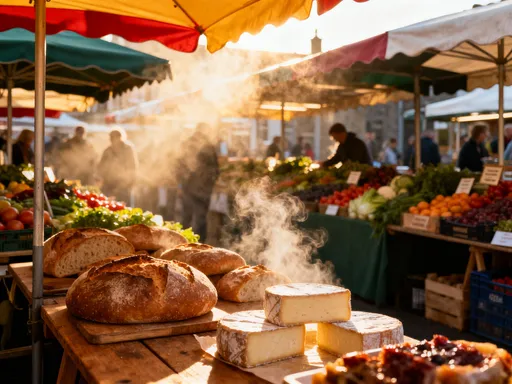
If there is one place that captures the soul of Cork’s food culture, it is the English Market. Established in 1788, this covered market is not a curated tourist attraction but a living, breathing hub where locals shop, chat, and plan their weekly meals. Walking through its arched passageways, the senses are immediately overwhelmed—in the best possible way. The rich aroma of spiced beef hangs in the air, mingling with the sharp tang of artisanal cheeses and the earthy scent of just-dug potatoes. Vendors call out greetings, offer samples, and share cooking tips with customers who have been coming for decades.
Stalls overflow with color: ruby-red beets, emerald kale, golden loaves of sourdough, and baskets of oysters pulled from nearby waters that morning. One vendor proudly displays drisheen, a traditional blood pudding with a deep, savory flavor that speaks to Ireland’s resourceful culinary history. Another offers handmade sausages spiced with fennel and thyme, while a third presents wheels of sheep’s milk cheese from a small farm in West Cork. These are not novelty items for visitors; they are staples in Cork kitchens, passed down through generations.
What makes the English Market extraordinary is its continuity. Many vendors are second- or third-generation purveyors, inheriting stalls from parents and grandparents. Their knowledge is deep, their pride evident. They don’t just sell food—they preserve a way of life. A woman slicing spiced beef explains how her family recipe hasn’t changed in over a century. A fishmonger describes the tides that determine his catch. This isn’t performative heritage; it’s lived tradition. Tourists are welcome, but they are guests in a space built for locals. And that authenticity is what gives the market its unmatched charm.
For visitors, the market is not just a place to eat but to learn. It offers a masterclass in seasonal eating, sustainable sourcing, and the value of human connection in food systems. There are no chain stores, no plastic-wrapped convenience meals. Everything feels intentional, from the hand-labeled jars of honey to the baskets of free-range eggs. It’s a reminder that food can be both simple and profound, humble and deeply satisfying. To walk through the English Market is to witness Cork’s culinary heart beating strong.
From Farm to Table: Cork’s Local Food Ethos
Cork’s food culture thrives because it is rooted in place. The region’s rich farmland, rolling pastures, and rugged coastline provide an abundance of fresh, high-quality ingredients. This proximity to source fuels a powerful farm-to-table movement that extends beyond trendy restaurants into homes, schools, and community kitchens. The philosophy is simple: eat what grows nearby, support those who grow it, and honor the seasons.
In nearby towns like Fermoy, Kanturk, and Clonakilty, small farms raise free-range pigs, sheep, and poultry with care and attention. These animals graze on lush grass, resulting in meat that is flavorful, tender, and ethically produced. Dairy farms supply rich milk and butter, the kind that spreads easily and tastes of summer meadows. Along the coast, fishermen harvest mussels, oysters, and mackerel using sustainable methods, often selling directly to restaurants or at local markets. Even seaweed is gathered by hand from rocky shores, used in everything from soups to skincare, reflecting an age-old respect for the sea’s bounty.
Seasonality is not a buzzword in Cork—it’s a way of life. Menus change with the calendar. In spring, dishes feature wild garlic, lamb, and fresh greens. Summer brings heirloom tomatoes, strawberries, and line-caught fish. Autumn is for root vegetables, game, and apples pressed into cider. Winter focuses on preservation—smoked meats, pickled vegetables, and slow-cooked stews that warm the bones. This rhythm connects people to the land in a tangible way, reminding them that food is not a commodity but a gift from nature.
Restaurants across the city reflect this ethos. Many list their suppliers on menus, proudly naming the farms and fishermen who provide their ingredients. Some even host seasonal tasting menus that tell a story of the region—one course might feature beetroot from a biodynamic farm, another pan-seared scallops from Bantry Bay. But this commitment isn’t limited to fine dining. Even casual cafes serve soups made with yesterday’s harvest, and bakeries use flour milled from Irish wheat. It’s a culture that values transparency, sustainability, and quality over convenience.
Modern Irish Flavors: How Cork Reinvents Tradition
While Cork deeply respects its culinary roots, it is far from stuck in the past. A new generation of chefs is reimagining Irish cuisine with creativity, confidence, and reverence. They are not discarding tradition but building on it, adding new layers of flavor, technique, and presentation. The result is a cuisine that feels both familiar and exciting—a bridge between the old and the new.
Take boxty, the traditional potato pancake. In Cork, it might be filled with wild mushroom and goat cheese, then drizzled with a nettle oil for a modern twist. Or consider colcannon, the classic mix of potatoes and cabbage, now elevated with truffle shavings and crispy pancetta. Even Irish stew, long seen as a humble one-pot meal, is being reinvented with slow-braised lamb shoulder, pearl onions, and a splash of local stout, served in a shallow bowl with a sprig of thyme. These dishes honor their origins while embracing contemporary tastes.
Gastropubs play a key role in this evolution. These are not your average pubs with token “gourmet” dishes. In Cork, gastropubs are where innovation meets comfort. The atmosphere remains warm and unpretentious—wooden tables, soft lighting, the hum of conversation—but the food is carefully crafted. A simple fish and chips might feature line-caught cod in a light beer batter, served with hand-cut chips and house-made tartar sauce. A vegetarian option could be a roasted beetroot and barley salad with honeyed walnuts and local blue cheese, showing that meatless doesn’t mean boring.
Upscale restaurants take this further, offering tasting menus that read like poetry. One might begin with a delicate oyster topped with cucumber gel and dill foam, followed by a main of Connemara lamb with Jerusalem artichokes and rosemary jus. Dessert could be a warm apple tart with brown butter ice cream and a shard of caramelized honeycomb. Yet even in these refined settings, there is no sense of intimidation. Service is friendly, explanations are offered without condescension, and the focus remains on enjoyment, not spectacle. This balance—between innovation and warmth—is what makes Cork’s dining scene so special.
Food & Community: Where Meals Bring People Together
In Cork, food is more than sustenance—it is a social force. Meals are moments of gathering, of slowing down, of reconnecting. Whether it’s a Sunday roast shared with family, a market lunch with friends, or a pub dinner after a long week, eating together is a cherished ritual. There is a deep understanding that food nurtures not just the body but the spirit.
Sunday roasts remain a cornerstone of family life. Grandparents, parents, and children gather around the table for slow-roasted beef or chicken, served with buttery potatoes, seasonal vegetables, and gravy made from the pan drippings. The meal stretches over hours, filled with stories, laughter, and second helpings. It’s not about perfection; it’s about presence. Leftovers are expected, even celebrated—transformed into next-day sandwiches or shepherd’s pie, minimizing waste and maximizing flavor.
The market, too, functions as a social hub. Locals don’t just shop—they meet. A woman buying fresh eggs might stop to chat with the farmer about his sheep. A man selecting cheese might ask the vendor for pairing advice, sparking a conversation that lasts well beyond the transaction. These interactions are not incidental; they are essential. They build trust, strengthen community, and reinforce the idea that food is relational. Even for visitors, the welcome is genuine. A smile, a recommendation, a shared moment over a sample of smoked salmon—these small gestures create a sense of belonging.
Pubs further this sense of connection. In Cork, a pub lunch is not just about the food but the company. Strangers strike up conversations over pints of stout. Regulars are greeted by name. The atmosphere is inclusive, never exclusive. This is not a city that puts up walls—literally or figuratively. Food breaks them down. Whether you’re sitting at a shared table or at the bar with a bowl of chowder, you’re part of the scene. That warmth, that openness, is as nourishing as the meal itself.
Sweet Endings: Cork’s Love Affair with Baking and Treats
No meal in Cork feels complete without something sweet. The city has a deep affection for baking, and its pastry culture is both rich and approachable. From simple buttery scones served with clotted cream and jam to elaborate apple tartlets dusted with cinnamon, desserts here are comforting, generous, and made with care.
Bakeries—both large and small—dot the city, their windows filled with golden loaves, flaky croissants, and rows of cupcakes iced in pastel shades. But it’s the traditional treats that hold a special place in hearts. Barmbrack, a fruit loaf soaked in tea and spices, is a fall favorite, often enjoyed with a cup of hot tea. It’s not just a snack; it’s a seasonal marker, tied to harvest and gathering. Another staple is the humble shortbread, crisp and crumbly, made with high-fat Irish butter that gives it an unmatched richness.
Chocolate lovers are equally well-served. Artisan chocolatiers craft truffles infused with sea salt, whiskey, or elderflower, using cocoa beans roasted to perfection. Some even incorporate local ingredients like heather honey or blackberry liqueur, creating flavors that are uniquely Cork. These treats are not just for tourists—they are gifts for neighbors, rewards for children, and staples at holiday tables.
Baking is also a family tradition. Many women in Cork learned to make soda bread or apple pie at their mother’s or grandmother’s side. Recipes are passed down, sometimes written on stained index cards, sometimes shared by memory. Baking is an act of love, of care, of continuity. To receive a homemade cake or a jar of jam is to be welcomed into someone’s world. In a fast-paced, digital age, these small, handcrafted gestures carry deep emotional weight.
Why Cork’s Food Culture Matters—And Why You Should Care
Cork’s food culture is about more than delicious meals. It is a testament to resilience, identity, and the power of community. In a world where fast food and globalized tastes often erase local character, Cork stands as a model of authenticity. It proves that tradition and innovation can coexist, that sustainability can be delicious, and that food can be a force for connection.
Every bite in Cork tells a story—of farmers who work the land with care, of fishermen who respect the tides, of bakers who rise early to knead dough by hand. It speaks of a people who take pride in their heritage but are not afraid to evolve. This is not a city clinging to the past; it is one building a future rooted in values—quality, seasonality, fairness, and warmth.
For travelers, Cork offers a rare opportunity: to eat with intention, to meet people with open hearts, and to taste a place in its truest form. It challenges assumptions and expands palates. It reminds us that food is not just fuel but culture, history, and relationship. To experience Cork’s food scene is to understand that how we eat reflects who we are.
So come with an open mind. Come with an empty stomach. Come ready to be surprised, nourished, and welcomed. Cork doesn’t just feed you—it invites you in. And in every bite, you’ll find history, heart, and a whole lot of flavor waiting to be discovered.