You Won’t Believe How Victoria’s Architecture Feels Like Stepping Into a Living Postcard
Walking through Victoria, Canada, I kept pinching myself—was this real? The city’s architecture isn’t just old or pretty; it’s alive with character. From Victorian-era masterpieces to charming heritage buildings, every street corner tells a story. This isn’t just sightseeing—it’s feeling history through stone, brick, and stained glass. If you’ve ever dreamed of wandering through a city that looks like a painted dream, Victoria delivers. With its meticulously preserved facades, tree-lined avenues, and skyline crowned by grand historic landmarks, the capital of British Columbia offers an experience unlike any other in North America. Here, time seems to pause, allowing visitors to step into a world where elegance, craftsmanship, and quiet dignity define the urban landscape.
First Impressions: A City That Looks Like It’s from Another Century
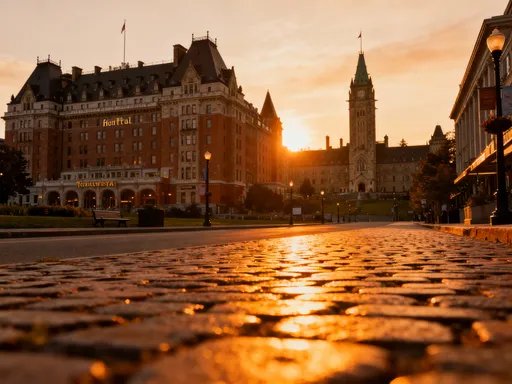
From the moment you arrive in Victoria, whether by ferry cutting across the Salish Sea or by plane touching down at the regional airport, the city unfolds like a carefully preserved page from a 19th-century travelogue. The skyline is not dominated by glass towers or steel spires, but by copper domes, sandstone turrets, and steeply pitched roofs that catch the Pacific light in golden hues. The most striking first view for many is the British Columbia Parliament Buildings, standing proudly at the edge of the Inner Harbour. Completed in 1898, these grand structures feature twin clock towers, intricate stonework, and a central dome that glimmers under the sun. At night, they are bathed in warm light, their reflections shimmering in the calm waters—a sight so postcard-perfect it feels almost staged.
Just steps away rises the unmistakable silhouette of the Fairmont Empress Hotel, its turrets and gables evoking a French château plucked from the Loire Valley and set gently on the Pacific coast. The air carries the scent of saltwater mingled with blooming camellias and ivy-covered stone, while the soft clatter of footsteps on cobblestone paths adds a rhythmic soundtrack to your stroll. Even the streetlamps—many original or faithfully restored—cast a soft, old-world glow. These sensory details are not accidental; they are the result of decades of intentional preservation, ensuring that Victoria’s charm remains authentic, not themed.
What makes the city feel timeless is not merely the age of its buildings, but the harmony with which they coexist. There is a consistency in scale, material, and design language that gives the downtown core a cohesive elegance. Sandstone, brick, and timber are the dominant materials, their textures softened by time and weather. Rooflines dance across the skyline—mansard, gabled, hipped—each contributing to a visual rhythm that feels both orderly and organic. Unlike cities where modern construction overshadows the past, Victoria’s development has been guided by strict heritage policies, ensuring new buildings complement rather than compete with their historic neighbors.
The Victorian Era’s Living Legacy
The name “Victoria” is more than a tribute to a monarch—it is a declaration of architectural identity. The city’s golden age coincided with the reign of Queen Victoria (1837–1901), a period when British influence shaped the built environment of Canada’s westernmost settlements. During this era, Victoria grew rapidly as a colonial port, attracting merchants, officials, and artisans who brought with them the architectural tastes of the Empire. The result was a cityscape infused with the ornate, eclectic spirit of Victorian design—a style characterized by asymmetry, rich ornamentation, and a love for verticality.
Victorian architecture in Victoria is not a museum exhibit; it is lived-in, loved, and maintained with care. Look closely at the homes in neighborhoods like James Bay, Fairfield, and Rockland, and you’ll see the hallmarks of the style: bay windows that project like glass jewels, decorative wood trim known as “gingerbread,” steeply pitched roofs with patterned shingles, and prominent front porches supported by turned wood columns. Many homes feature turrets or towers, once symbols of status and aspiration, now cherished as defining elements of the city’s skyline.
These homes were built to last, often using locally quarried stone and old-growth timber. Their interiors reveal handcrafted details—hardwood floors, built-in cabinetry, stained glass transoms above doorways—that modern construction rarely replicates. But preservation is not passive. Organizations like the Victoria Heritage Foundation and the City’s Heritage Commission work tirelessly to protect these structures from demolition or insensitive renovation. Grants, tax incentives, and strict bylaws ensure that changes to heritage homes respect their original character. As a result, many Victorian houses are not frozen in time, but gently adapted—updated with modern kitchens and heating systems while retaining their historic soul.
Beyond Victoriana: A Blend of Architectural Eras
While Victorian architecture defines Victoria’s character, the city is far from monolithic in style. A closer look reveals a rich tapestry of influences spanning more than a century of building. Just beyond the flamboyance of the Victorian era came the Edwardian period (1901–1914), which favored symmetry, lighter colors, and simpler lines. Edwardian homes, often found in neighborhoods like Uplands and Gonzales, feature balanced façades, hipped roofs, and large windows that flood interiors with natural light. They reflect a shift toward practicality and comfort, yet still maintain a sense of elegance and craftsmanship.
Religious architecture adds another layer to the city’s diversity. Christ Church Cathedral, located near the Empress Hotel, is a fine example of Gothic Revival design, with its pointed arches, ribbed vaults, and soaring spire. Built in the late 19th century, the cathedral’s stonework and stained glass create an atmosphere of reverence and timelessness. Smaller churches throughout the city echo this style, their steeples marking neighborhoods like gentle sentinels of the past.
The Arts and Crafts movement also left its mark, particularly in the early 20th century. Bungalows with wide eaves, exposed rafters, and stone foundations can be found tucked into quiet streets, their modest scale and natural materials reflecting a philosophy of simplicity and harmony with nature. These homes, often built by skilled local craftsmen, emphasize quality over ornament, using local stone and wood to create warmth and durability.
What makes Victoria truly remarkable is how these diverse styles coexist with thoughtful modern infill. Unlike cities where heritage districts are isolated, Victoria integrates new construction into historic neighborhoods with care. New buildings often follow height limits, use compatible materials like brick or stucco, and echo traditional rooflines. In some cases, only the façade of a historic building is preserved, while a modern structure rises behind it—a compromise that balances preservation with urban growth. Adaptive reuse projects, such as former warehouses converted into residential lofts or office spaces, demonstrate how old buildings can serve new purposes without losing their identity.
The Fairmont Empress: A Castle That Anchors the City
No discussion of Victoria’s architecture would be complete without the Fairmont Empress, a grand hotel that has welcomed guests since 1908. Designed by Francis Rattenbury, the same architect behind the Parliament Buildings, the Empress was conceived as a luxury destination for travelers arriving by rail and sea. Its château-style design—inspired by French Renaissance architecture—features steep copper roofs, turrets, dormer windows, and a central tower that commands views of the harbor. The building’s scale and presence make it a landmark visible from nearly every corner of downtown.
Stepping into the Empress is like entering a living drawing room from another era. The lobby, with its marble floors, wood-paneled walls, and grand staircase, exudes quiet opulence. Above, a glass ceiling allows natural light to filter down, illuminating the intricate ironwork of the chandeliers. The famous Tea Lobby, where afternoon tea has been served for over a century, is a ritual in itself—guests in fine china, silver teapots, and tiered trays of scones and pastries, all beneath crystal chandeliers and the gaze of portrait-lined walls. Even if you don’t stay overnight, a visit to the Empress is essential for anyone wanting to feel the city’s historic heartbeat.
The hotel has undergone several renovations over the decades, most recently a multi-million-dollar restoration that carefully preserved its heritage features while upgrading guest rooms, plumbing, and electrical systems. Original woodwork was restored rather than replaced, historic fireplaces were revived, and period-appropriate furnishings were sourced to maintain authenticity. The result is a building that feels both grand and lived-in, luxurious yet welcoming. The Empress is not a relic—it is a working hotel, a venue for weddings, conferences, and celebrations, a place where history is not just observed but experienced.
Hidden Gems: Walking the Quiet Streets for Architectural Wonders
While the Parliament Buildings and the Empress draw the crowds, Victoria’s true architectural magic often lies in its quieter corners. A morning walk through neighborhoods like Rockland or James Bay reveals a different kind of beauty—one of intimacy and detail. Here, heritage homes nestle behind ivy-covered fences, their gardens spilling over with rhododendrons, roses, and camellias. The pace is slow, the streets lined with mature trees that arch overhead, creating a canopy of green that softens the stone and brick.
It’s on these streets that you begin to notice the small wonders: a hand-forged iron gate shaped like twisting vines, a stained glass transom above a front door glowing with color in the morning light, a porch column carved with acanthus leaves. Many homes feature original details—wrought-iron railings, decorative shingles, leaded glass windows—that speak to the care of their owners. Some houses have plaques noting their construction date or architectural style, offering quiet lessons in local history.
For the curious traveler, self-guided walking tours are an ideal way to explore. The City of Victoria offers heritage walking maps, and local historical societies publish brochures highlighting key buildings and neighborhoods. Start at Government Street and wander east into Rockland, or begin at the Empress and follow the shoreline path toward Dallas Road, where ocean views blend with architectural charm. Bring a camera, but also allow time to simply pause and absorb—the beauty here is in the details, not just the grand vistas.
How to Experience the Architecture Like a Local
To truly appreciate Victoria’s architecture, adopt the rhythm of a local. Start early in the morning, when the light is soft and the streets are quiet. This is the best time to photograph buildings without crowds, and to hear the city wake up—the rustle of leaves, the distant cry of gulls, the chime of a church bell. Wear comfortable shoes with good grip; sidewalks can be uneven, especially near older buildings with settled foundations.
Bring a camera, but don’t let it distract you from being present. Use a zoom lens to capture intricate details like carved stonework or stained glass, and experiment with angles to highlight symmetry or perspective. If you’re using a smartphone, enable grid lines to help compose balanced shots. But remember: the goal is not just to collect photos, but to absorb the atmosphere.
Pair your walk with a stop at a local café. Victoria has a thriving coffee culture, with independent roasters tucked into heritage buildings. Sit outside with a latte and admire the façade across the street—a century-old bank turned into a bookstore, a former schoolhouse now housing a bakery. These conversions are testaments to the city’s respect for its past while embracing the present.
For a deeper understanding, consider joining a guided heritage tour. Local historians lead walking tours that explore architectural styles, neighborhood histories, and preservation efforts. Some tours focus on specific themes, such as “Gardens and Gateways” or “Women in Architecture.” There are also mobile apps that use GPS to identify buildings as you pass, offering instant insights into their age, style, and former occupants. Above all, practice slow travel: look up, not just ahead. So much of Victoria’s beauty is at eye level and above—cornices, pediments, weathervanes, and rooftop sculptures that reward patient observation.
Why Victoria’s Architecture Matters—And How to Respect It
Victoria’s architecture is more than a collection of pretty buildings; it is a living record of community values, identity, and resilience. These structures connect generations, offering a tangible link to the people who built, lived in, and preserved them. They foster a sense of pride and continuity in a world that often feels transient. When a family restores a 1905 home, or a business chooses to honor a historic façade, they are not just maintaining property—they are honoring a legacy.
Preservation is not without challenges. Pressure to develop, rising property values, and the costs of maintaining old buildings can threaten heritage sites. Yet Victoria has shown that thoughtful planning and community engagement can protect the past while allowing growth. The city’s heritage inventory includes over 1,000 protected buildings, and public consultations often shape decisions about new construction. This collective stewardship ensures that Victoria remains a city of character, not just convenience.
As visitors, we have a role to play. Admire the homes, but do not trespass. Photograph the details, but do not touch fragile woodwork or ironwork. Support local businesses in heritage buildings, and learn about the history behind the façades you pass. Above all, approach the city with reverence—not as a backdrop for a photo, but as a living, breathing community shaped by time and care.
Victoria is not a museum frozen in the past. It is a city that cherishes its history while moving forward with grace. To walk its streets is to step into a living postcard—one that invites you to pause, look up, and feel the quiet dignity of a place where beauty, history, and community are built to last.