How I Built a Steady Return with Wine—My Strategy That Actually Works
What if your wine rack could do more than just impress guests? A few years ago, I started treating wine not as a drink, but as an asset. Unlike stocks or real estate, it felt risky—until I found a strategy that prioritizes stability over hype. No get-rich-quick schemes, just careful selection, storage, and timing. This is how I turned a passion into a reliable part of my portfolio, and why you might want to rethink that bottle in your cellar.
The Hidden Potential in Your Cellar
Most people see wine as a beverage, a momentary pleasure to be enjoyed with dinner or shared at celebrations. But for a growing number of thoughtful investors, wine represents something deeper: a tangible, alternative asset with the potential for long-term appreciation. Unlike stocks, which can swing wildly with market sentiment, or bonds, which are sensitive to interest rates, fine wine often moves independently of traditional financial markets. This lack of correlation is one of its most compelling features. When stock markets dip, fine wine prices have historically held steady—or even risen—as collectors seek refuge in physical assets with intrinsic appeal.
The data supports this resilience. The Liv-ex 100 Index, which tracks the performance of the 100 most sought-after wines traded on the London International Vintners Exchange, has demonstrated consistent growth over the past two decades. While there have been short-term fluctuations, the long-term trend is upward. This isn’t driven by speculation alone, but by a combination of scarcity, global demand, and the finite nature of each vintage. Once a bottle is gone, it cannot be replaced. This inherent scarcity, especially for wines from legendary producers in regions like Bordeaux, Burgundy, and Piedmont, creates a foundation for value that is both durable and predictable.
What truly drives appreciation in fine wine? Three key factors stand out: provenance, reputation, and demand. Provenance refers to the wine’s history—where it’s been stored, who’s owned it, and whether it has been kept under optimal conditions. A bottle with a documented, unbroken chain of professional storage will command a premium over one with uncertain origins. Reputation matters because the names of certain châteaux and domaines carry centuries of craftsmanship and consistency. Wines from producers like Château Lafite Rothschild, Domaine de la Romanée-Conti, or Gaja have earned trust across generations of collectors. Finally, demand—especially from emerging markets in Asia and the Middle East—has steadily increased over time, pushing prices higher for top-tier bottles.
Perhaps the most overlooked advantage of wine as an investment is its emotional dimension. Unlike a stock certificate or a digital currency, a bottle of wine is something you can see, hold, and even taste. It connects wealth to experience. This tangible quality makes it more than just a financial instrument—it becomes part of a legacy. When you invest in wine, you’re not just buying an asset; you’re preserving culture, craftsmanship, and time itself. And in doing so, you create a portfolio that reflects not only your financial goals but also your personal values.
Why Stability Matters More Than Speed
In the world of personal finance, there’s a constant temptation to chase high returns. Ads promise quick gains, influencers tout overnight successes, and financial news highlights dramatic market swings. But for most investors—especially those in their 30s to 50s with family responsibilities and long-term goals—stability is far more valuable than speed. This is especially true in wine investing, where the real opportunity lies not in flipping bottles for short-term profit, but in building steady, compounding value over time.
Wine is not a speculative asset by nature. Its value grows gradually, shaped by aging, critical acclaim, and market maturity. A great vintage from Bordeaux, for example, may take 10 to 15 years to reach its peak drinking window—and its market value often follows a similar trajectory. This slow, predictable appreciation mirrors the kind of wealth-building strategy that serves families best: one based on patience, discipline, and long-term vision. It’s the financial equivalent of planting an oak tree—you don’t expect shade in the first year, but decades later, its presence is invaluable.
The stability of fine wine is rooted in the consistency of its top producers. A château like Pétrus or a domaine like Henri Jayer doesn’t release new vintages every year with wildly different quality. Instead, they adhere to rigorous standards, ensuring that even in less-than-ideal growing seasons, the wine maintains a certain level of excellence. This consistency is reflected in market prices, which tend to rise steadily rather than spike unpredictably. When you invest in these “blue-chip” wines, you’re not betting on a single year’s weather or a fleeting trend—you’re aligning with a legacy of quality that has been validated over decades.
Critical ratings also play a crucial role in this stability. Scores from respected critics like Robert Parker, Jancis Robinson, or Antonio Galloni serve as trusted benchmarks for quality. A vintage that receives a 98-point rating is more likely to appreciate over time than one with a middling score, simply because it attracts serious collectors and commands higher demand. These ratings don’t guarantee returns, but they do reduce uncertainty. They provide a framework for making informed decisions, much like credit ratings do for bonds. By focusing on highly rated vintages from reputable producers, investors can build a portfolio that grows reliably, without the emotional rollercoaster of chasing fads.
Building a Foundation: Selecting the Right Bottles
Not all wine is created equal—far from it. In fact, industry experts estimate that over 95% of the wine produced globally is meant to be consumed within a year of release. These are everyday bottles, perfect for dinner but with no long-term investment potential. The key to successful wine investing lies in identifying the small fraction of wines that are built to age and appreciate. This requires a disciplined approach to selection, grounded in four essential criteria: appellation, producer, vintage, and format.
Appellation—the geographic origin of the wine—is one of the most important factors. Certain regions have earned global recognition for producing wines with exceptional aging potential. Bordeaux, with its structured Cabernet Sauvignon and Merlot blends, is a cornerstone of any serious collection. Burgundy, known for its expressive Pinot Noir and Chardonnay, offers some of the most sought-after and valuable bottles in the world. In Italy, regions like Barolo in Piedmont produce powerful, age-worthy Nebbiolo wines that have gained a loyal following among collectors. These appellations have proven track records, supported by centuries of winemaking tradition and consistent market demand.
Just as important is the producer. A great appellation doesn’t guarantee a great wine—execution matters. The reputation of the château, domaine, or winery is a strong indicator of quality and consistency. Producers who invest in meticulous vineyard management, low yields, and traditional winemaking techniques are more likely to create wines that improve with age. For example, a 2016 vintage from Château Margaux is likely to hold its value better than a similarly priced bottle from a lesser-known estate, simply because of the producer’s track record and market recognition. This doesn’t mean you should ignore emerging producers entirely, but they should represent only a small, carefully considered portion of your portfolio.
Vintage quality is another critical factor. Not every year is equally good for wine production. Weather conditions—rainfall, temperature, sunlight—can significantly impact grape quality. In Bordeaux, for instance, 2010, 2015, and 2016 are widely regarded as exceptional vintages, while 2013 was more challenging. Collectors and investors pay close attention to vintage charts and critic reviews to assess which years are likely to produce long-lived, high-scoring wines. By focusing on top-rated vintages, you increase the odds that your investment will appreciate over time.
Finally, bottle format can influence both aging potential and market value. While the standard 750ml bottle is most common, larger formats like magnums (1.5 liters), double magnums, and imperials are often preferred by collectors. These larger bottles age more slowly due to a lower oxygen-to-wine ratio, which can lead to more graceful evolution over time. They are also rarer, making them more desirable at auctions and resale markets. A magnum of a top Burgundy can command a 20-30% premium over the equivalent volume in standard bottles, simply because of its scarcity and superior aging characteristics.
The Critical Role of Storage and Provenance
Even the most exceptional bottle of wine will lose its value—and its quality—if it’s not stored properly. Temperature, humidity, light, and vibration all play a role in how a wine ages. Exposure to heat can cause premature aging or even spoilage, while fluctuations in temperature can push corks in and out, allowing oxygen to seep in and degrade the wine. Direct sunlight and artificial light can also damage wine, particularly in clear or light-colored bottles. High humidity can promote mold growth on labels, which may not affect the wine inside but can significantly reduce its resale value. For an investment-grade bottle, condition is everything.
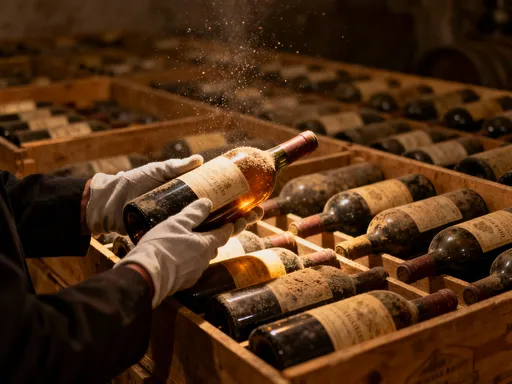
Professional storage facilities are designed to eliminate these risks. Climate-controlled cellars maintain a consistent temperature of around 55°F (13°C) and a humidity level of about 70%, creating an ideal environment for long-term aging. Bottles are stored on their sides to keep corks moist and prevent drying out. The space is dark, vibration-free, and monitored 24/7 to ensure stability. These conditions are not easily replicated in a home setting, where basements, closets, or kitchen cabinets often experience temperature swings, light exposure, and frequent movement.
Using a bonded warehouse offers additional advantages beyond preservation. In countries like the UK, wine stored in a bonded facility remains outside the tax system until it is removed for consumption or sale. This means no immediate VAT or duty payments, allowing the investment to grow tax-efficiently over time. It also provides a clear, auditable chain of custody, which is essential for proving provenance. When you eventually sell a bottle, having full documentation of its storage history can significantly enhance its value and appeal to serious buyers.
Provenance—the documented history of a wine’s ownership and storage—is one of the most important factors in determining market price. A bottle that has been kept in a private home with no records may be viewed with suspicion, even if it appears to be in good condition. In contrast, a bottle with a complete provenance trail, stored professionally from release to sale, will command a premium. Auction houses and dealers often require provenance verification before accepting a bottle for sale. This is especially true for rare or high-value wines, where authenticity is paramount. For the investor, this means that proper storage isn’t just about preservation—it’s about protecting and enhancing value.
Timing the Market: When to Buy, When to Sell
Wine doesn’t trade on a centralized exchange like stocks or currencies, so timing your investments requires a different approach. There’s no real-time ticker, no daily volume data, and no automated trading algorithms. Instead, the market moves through auctions, private sales, and direct transactions between collectors and merchants. This decentralized nature means that opportunities often arise during periods of market quiet or after a wave of hype has passed.
One of the best times to buy is shortly after a new vintage is released, especially in the en primeur market, where wines are sold as futures before they are bottled. In Bordeaux, for example, the en primeur campaign allows investors to purchase wines at a discount compared to their eventual bottled price. If the vintage receives strong critical acclaim, the wine may appreciate significantly by the time it’s released two years later. Buying early, therefore, can lock in a favorable entry point—provided the vintage quality justifies it.
Another smart strategy is to buy during market corrections. Just like any asset class, fine wine experiences cycles of enthusiasm and retreat. After a period of rapid price increases, some collectors may sell off portions of their portfolio, creating a surplus of supply. This can lead to temporary price dips, especially for wines that were previously overhyped. For disciplined investors, these moments represent opportunities to acquire high-quality bottles at more reasonable valuations. Patience is key—waiting for the right moment, rather than reacting to fear or greed, is what separates long-term success from short-term disappointment.
When it comes to selling, the goal is not to maximize profit at any cost, but to exit at the right time. The ideal selling window often coincides with a wine’s peak drinking period. As a vintage approaches maturity, demand from collectors and fine dining establishments tends to increase, pushing prices higher. This is especially true for wines that are rare or have received perfect scores. Selling during this window allows investors to realize gains while still offering buyers a wine at its peak condition. Selling too early means leaving money on the table; selling too late risks a decline in both quality and value.
The key to successful timing is having a plan. Rather than reacting to market noise, successful wine investors set clear goals: a target holding period, a desired return, and a defined exit strategy. They monitor market trends, track auction results, and stay informed about critical reviews and economic conditions. But they don’t let emotion drive decisions. In a world where financial markets are often ruled by fear and greed, wine investing offers a refreshing alternative—one where patience, knowledge, and discipline are the true drivers of success.
Tools and Platforms That Keep You in Control
Thanks to advances in technology, wine investing has become more accessible and transparent than ever before. Gone are the days when only a select few with deep industry connections could participate in the fine wine market. Today, a range of platforms and tools empower individual investors to make informed decisions, verify authenticity, and track performance in real time.
Online auction houses like Sotheby’s, Christie’s, and Acker Merrall & Condit offer global access to high-quality collections. These platforms provide detailed catalog descriptions, provenance information, and high-resolution images, allowing buyers to assess condition and authenticity before bidding. They also publish post-auction results, which serve as valuable benchmarks for current market values. For investors, this transparency reduces risk and increases confidence in pricing.
Specialized wine investment platforms such as Vinovest, Cult Wines, and Wine Invest offer additional layers of support. These services provide curated portfolios, professional storage, insurance, and market analysis. Some allow fractional ownership, enabling investors to gain exposure to rare wines without purchasing an entire case. While direct ownership offers more control, fractional investing can be a lower-cost entry point for those just beginning. Each model has its trade-offs: direct ownership requires more hands-on management, while managed funds charge fees but offer convenience and expertise.
Real-time pricing data is now available through subscription services like Wine-Searcher and the Liv-ex Market Index. These tools allow investors to track price movements across regions, producers, and vintages. By monitoring trends over time, you can identify emerging opportunities and avoid overvalued segments. Access to expert analysis—from sommeliers, critics, and market analysts—further enhances decision-making, turning what might seem like guesswork into a data-driven strategy.
For the serious investor, these tools are not just conveniences—they are essential components of a disciplined approach. They provide the information, security, and structure needed to treat wine as a legitimate part of a diversified portfolio. In a market where authenticity and condition are everything, having the right resources can make all the difference between success and disappointment.
Avoiding the Traps: Common Mistakes and How to Dodge Them
Even with the best intentions, many new wine investors fall into common pitfalls that erode returns and undermine confidence. The most frequent mistake is trophy hunting—chasing famous names without understanding the underlying value drivers. Buying a bottle of Domaine de la Romanée-Conti because it’s prestigious, rather than because it fits a well-researched strategy, is a recipe for overpaying. While iconic wines can be excellent investments, they should be part of a balanced portfolio, not the sole focus.
Another common error is neglecting storage. Some investors buy fine wine with the intention of storing it at home, only to realize too late that their environment is unsuitable. A bottle kept in a garage or under the stairs may look fine on the outside, but internal damage from temperature fluctuations can ruin its quality and value. The cost of professional storage is modest compared to the potential loss of a high-value bottle. Skipping this step is a false economy.
Over-concentration is another risk. Putting all your investment into one region, producer, or vintage exposes you to unnecessary volatility. If a particular château faces a string of poor vintages or negative press, the value of your entire portfolio could suffer. Diversification—across regions, styles, and price points—is just as important in wine as it is in traditional investing. A balanced collection spreads risk and increases the likelihood of steady, long-term growth.
Other overlooked factors include insurance, transaction costs, and taxes. Fine wine should be insured against loss or damage, especially when stored off-site. Buying and selling often involve fees—auction commissions, shipping, authentication charges—that can eat into returns if not accounted for. And in some jurisdictions, capital gains tax applies to wine sales, so it’s important to understand the rules in your country. Treating wine as a serious investment means addressing these details with the same care as you would with stocks or real estate.
Conclusion: Turning Passion into Patience, and Patience into Value
Wine investing is not about glamour or get-rich-quick dreams. It’s about discipline, knowledge, and the quiet accumulation of value over time. The most successful portfolios are not built in a year, but over decades—bottle by bottle, vintage by vintage. They reflect a deep respect for quality, a commitment to proper care, and a long-term perspective that stands in contrast to the noise of daily financial markets.
What makes wine unique is that it bridges the emotional and the financial. It’s an asset you can enjoy, share, and pass down—a legacy in liquid form. But to realize its potential, it must be treated with the same seriousness as any other investment. That means doing your research, selecting wisely, storing properly, and timing your moves with patience rather than impulse.
In a world of instant gratification and market volatility, wine offers a refreshing alternative. It rewards those who are willing to wait, to learn, and to care. And in the end, the returns are not just measured in dollars, but in the satisfaction of knowing you’ve built something of lasting value—one carefully chosen bottle at a time.